
EA Ends Remote Work, Recalls Staff to Office
Author : Ryan
Dec 02,2025
Electronic Arts has informed its employees that it will permanently end its remote work policies and implement a full return-to-office mandate.
In an email sent to staff today, obtained by IGN, CEO Andrew Wilson stated that in-person collaboration creates "a kinetic energy that fuels creativity, innovation, and connection, often leading to unexpected breakthroughs that result in incredible experiences for our players." He went on to broadly define the new "hybrid work" model as a "minimum of three days per week in your local office," adding that "offsite local roles" would be gradually phased out.
In a follow-up email from EA Entertainment President Laura Miele, also viewed by IGN, further details were clarified, describing the company's shift from "a decentralized approach to a globally consistent, enterprise-wide work model":
These changes will not take effect immediately. Employees should continue working as directed by your Business Unit until further notice, regardless of where you live.Work model transitions will come with a minimum 12-week notice period before any changes are implemented. The timing will vary by location and will be communicated locally with plenty of advance notice.Hybrid work will mean working from your local office at least three days per week–this aligns with what’s outlined in Andrew’s EA Action. We are introducing a new 30-mile/48-km radius around EA locations.What this means:Employees who live within 30-miles/48-km of an EA location will transition to a Hybrid work model. Employees who live outside the 30-mile/48-km radius will be considered remote unless their role is designated as On Site or Hybrid.We will also sunset the Offsite Local work model. Depending on your location, this transition may take 3 to 24 months.Any work model exception and future Remote hires will require a CEO Direct’s /my approval.Several EA sources speaking anonymously to IGN reported that employees felt upset and confused. Some shared concerns about newly required hours-long commutes, while others raised issues related to childcare or medical conditions that had been better accommodated through remote work. Those classified as remote employees outside the 30-mile radius expressed worry about the future of their roles if they were unable or unwilling to relocate closer to an office long-term. Two sources explained that, according to the details provided by Miele, existing remote workers would see their exemptions from office work phased out over the next 3 to 24 months.
While remote work has long been common in the video game industry, it became especially widespread during and after the 2020 COVID-19 pandemic, when stay-at-home mandates pushed many major companies to adopt remote work as a long-term solution. In the years since, companies have increasingly hired remote staff, and many employees originally based near offices moved to more affordable cities under the assumption that remote work would remain permanent.
Recently, however, other major video game companies have also been recalling employees to the office, leading to frustration and, in some cases, employee departures as staff faced difficult decisions between costly relocations and their careers. Companies such as Rockstar Games, Ubisoft, and Activision Blizzard have faced both internal and external criticism over these policies. Despite the backlash, the trend toward office returns appears to be accelerating, with more companies like EA now requiring in-office presence once again.
EA recently laid off approximately 300 employees across the company, following earlier job cuts at BioWare this year and the elimination of around 670 roles last year.
IGN has reached out to EA for comment.
Latest Articles

Danny Dyer's New Film Sparks Social Media Frenzy
The Nine-Year Wait is OverAfter nearly a decade of soaring through Clash Royale battles without an upgrade, the Inferno Dragon finally gets its moment to shine with a spectacular Evolution form. To celebrate this milestone, Supercell cooked up someth

Real Vampires gives you a taste (or a bite) of authentic Slavic vampire folklore, coming soon this Halloween
Quirky visuals and dual perspectivesHorror and humour combinedLaunching on October 30thDespite what Hollywood—especially its gleaming vampires—might have you believe, blood-sucking creatures of the night stem from real folklore. The aptly titled Real
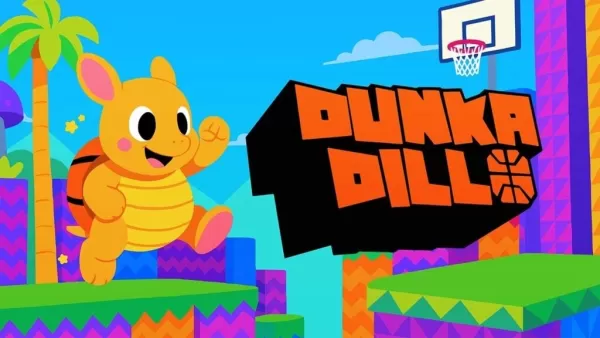
Dunkadillo Is an Upcoming Platformer from the Creator of the Dadish Series
Thomas K. Young, the indie creator known for games like Dadish, Be Brave, Barb, and Super Fowlst, returns with a fresh platforming experience named Dunkadillo, launching soon on Android. This title merges basketball gameplay mechanics with armadillo

NetEase Launches Multifaction Adventure Sea of Remnants
Sea of Remnants is the latest teaser release from NetEase.It showcases a musical score and a pirate theme.So far, there are few concrete details, leaving ample room for speculation.Not long ago, NetEase was widely viewed unfavorably by many, particul
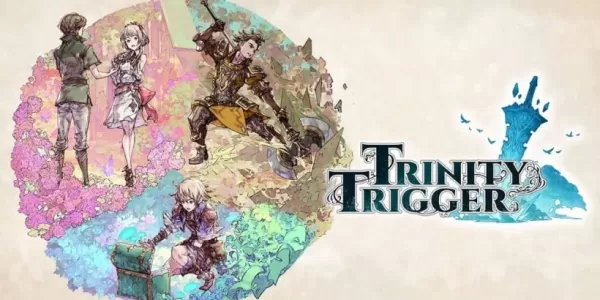
Trinity Trigger Classic JRPG Launches on Mobile
Trinity Trigger is now available on iOS and AndroidExperience classic JRPG action on mobile, drawing inspiration from 90s favoritesInstantly swap between eight weapon types and craft your party to conquer challenging dungeonsWhen you hear "old school

Sonic Racing: CrossWorlds Reveals Closed Test Features
Sonic Racing: CrossWorlds will showcase a variety of beloved characters from the Sonic universe and beyond. Discover all the exciting new features, gameplay mechanics, and details about the upcoming closed network test in our latest update.Discover t
Latest Games

Secret Forest
Card丨28.10M

Hyper PA
Role Playing丨125.94M


Slot Book 777
Card丨28.10M


Jet Gaming
Card丨12.80M


4Play - Mau Binh Online
Card丨47.60M

Дурак на Раздевание +18
Card丨24.60M
Trending Games
MORE +







![FurrHouse [Ch. 3]](https://images.dshu.net/uploads/30/1719555089667e54115d59f.jpg)
Top News
MORE +

01
01-16
Zenless Zone Zero Confirms Version 1.5 Special Program Livestream Date and Time
SummaryZenless Zone Zero revealed the start date for Version 1.5 "Astra-nomical Moment" on January 10 at 19:30 (UTC+8).Version 1.5 plans to add S-Rank characters Astra Yao and Evelyn Chevalier.Not much else is known about Version 1.5, though recent leaks have teased plenty of new content and events
02
01-21
Final Fantasy Updates Fix Controller Glitch
Patches for Final Fantasy VII Remake are now available on Steam, the Epic Games Store, and PlayStation 5. This update resolves issues with controller vibration motors. The game follows Cloud Strife, a former SOLDIER, as he joins Avalanche to prevent Shinra Electric Power Company from destroying th
03
04-18
"Jurassic World Rebirth Trailer Unveils Dinosaur Chaos Before Summer Release"
Jurassic World Rebirth made a roaring entrance during Super Bowl Sunday with a special trailer that showcased even more dinosaur action in anticipation of its July 2025 premiere. The latest footage features stars Scarlett Johansson and Mahershala Ali, who initially capture the audience's attention b
04
04-24
"Dune: Awakening Delay Extended by Three Weeks for Beta-Inspired Changes"
Dune: Awakening, the highly anticipated open-world survival MMO inspired by Frank Herbert's iconic sci-fi novels and Denis Villeneuve's films, has been pushed back to a new release date of June 10, 2025. Funcom, the game's developer, announced this delay alongside an exciting early access opportunit
05
12-12
Immersive Adventure Awaits in 'In the Turquoise Moonglow' Update for Wuthering Waves
Wuthering Waves Version 1.2 Update: A Sneak Peek at "In the Turquoise Moonglow"
Get ready, Wuthering Waves players! Kuro Games is launching Phase One of the highly anticipated Version 1.2 update on August 15th. A new trailer reveals exciting additions, including a fresh Resonator, new weapons, ques
Topics
More +